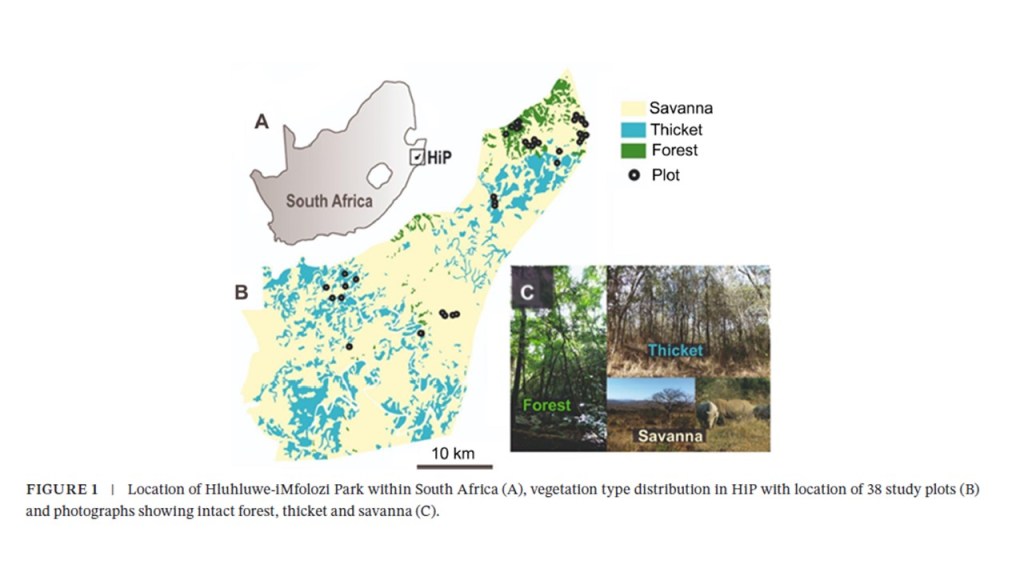
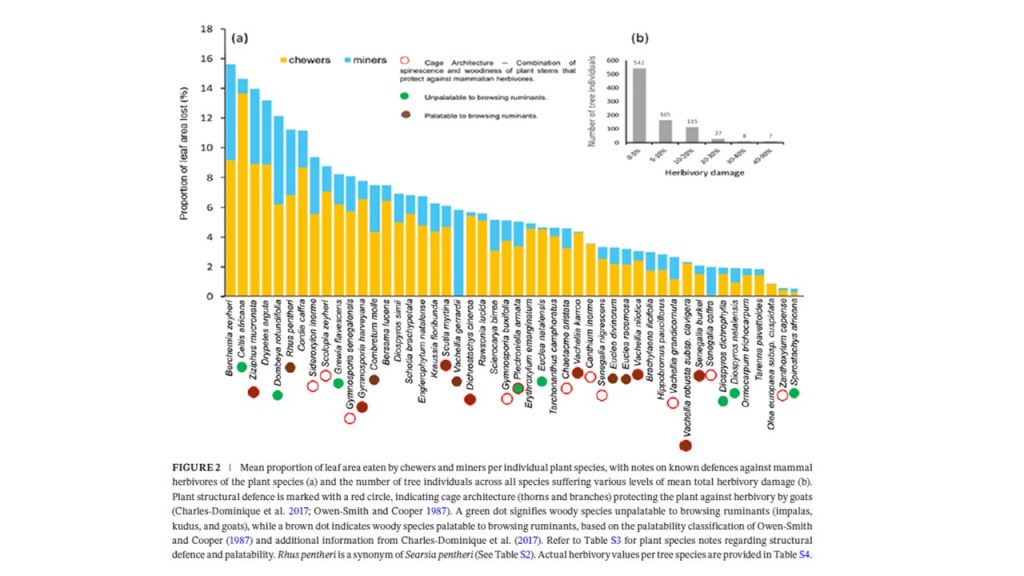
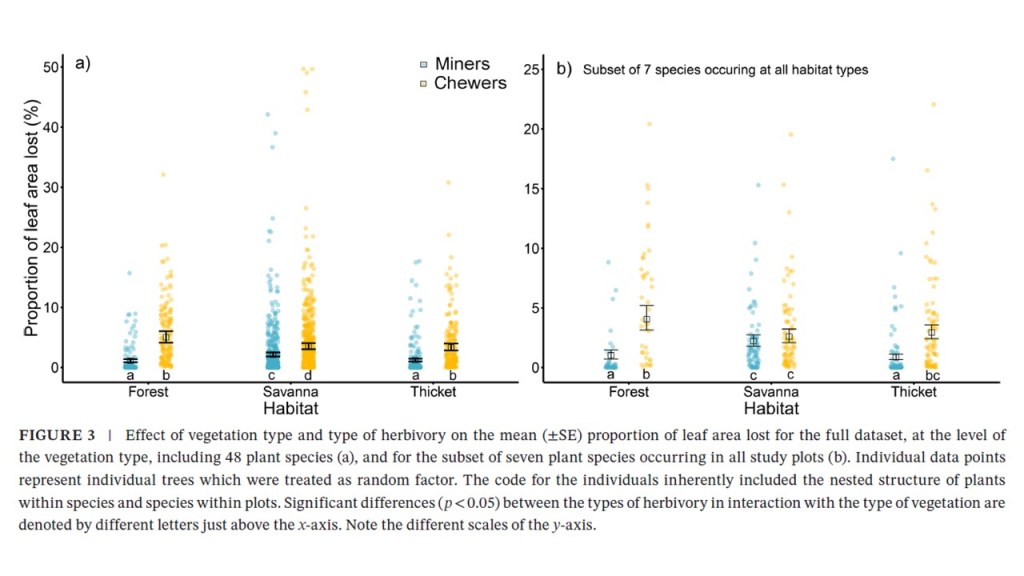
We investigated insect herbivory in a South African savanna-forest mosaic within Hluhluwe-iMfolozi Park, surveying 864 woody plants across 48 species in 38 plots. This study highlights a neglected ecological process: insects consumed 6% of leaf biomass, comparable to global averages for temperate forests. Damage varied by habitat, with forests and savannas experiencing 70% higher herbivory than thickets. Chewing insects caused more damage in forests, while miners were more prevalent in savannas.
Key findings show insect herbivory correlated with plant traits, increasing with specific leaf area but decreasing with higher carbon and dry matter contents. Surprisingly, no significant trade-off existed between insect and mammal herbivory, though structurally defended plants tended to attract more insects.
In savannas, plots with higher fire frequencies and lower mammal densities had increased herbivory. These results suggest that fire may promote re-sprouting of less defended leaves, offering more opportunities for herbivorous insects. Conversely, rainfall did not significantly affect herbivory, suggesting complex interactions with other environmental factors.
Our findings emphasize that insect herbivory is a substantial force influencing plant community dynamics, comparable in impact to mammalian herbivory in certain contexts. This study underscores the need for more research on insect herbivory in African ecosystems, where it has been historically overlooked.
Keywords: insect herbivory, savanna-forest mosaic, leaf chewers, leaf miners, fire frequency, plant traits, South Africa, Hluhluwe-iMfolozi Park.