Krystof Korejs’ study on bird species in Papua New Guinea’s rainforests sheds light on the consequences of deforestation and forest conversion. This study is very important, because the island of New Guinea is home to the third largest continuous rainforest in the world, which is increasingly threatened by large-scale deforestation and forest conversion. Despite this, there is little scientific data on the highly biodiverse local avifauna and in particular on its response to anthropogenic disturbances. This is why he focused on the problem by examining bird assemblages in human-altered rainforests in lowland Papua New Guinea.
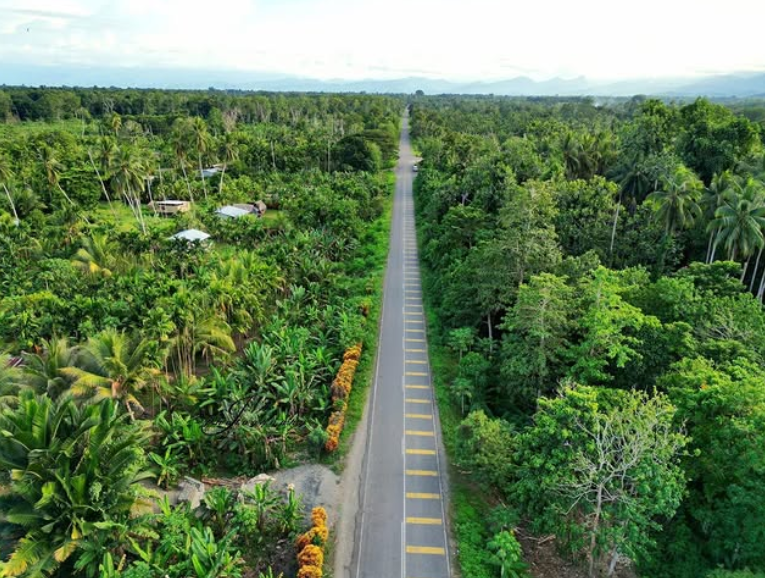
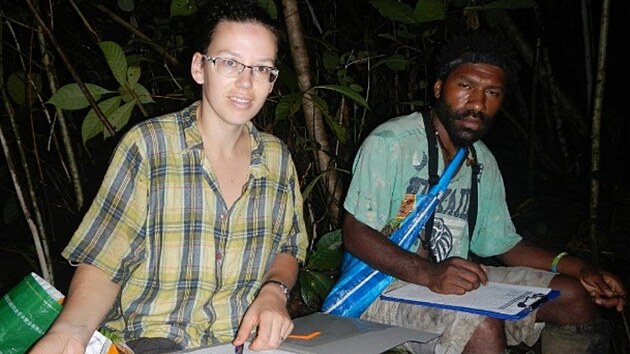
The research employed point counts across four forest types, including primary forests, secondary forests regrown after agriculture, and forest fragments impacted by logging. Over 90 survey days, 160 point counts were conducted, with field assistant Bonny Koane contributing extensively to the data collection.

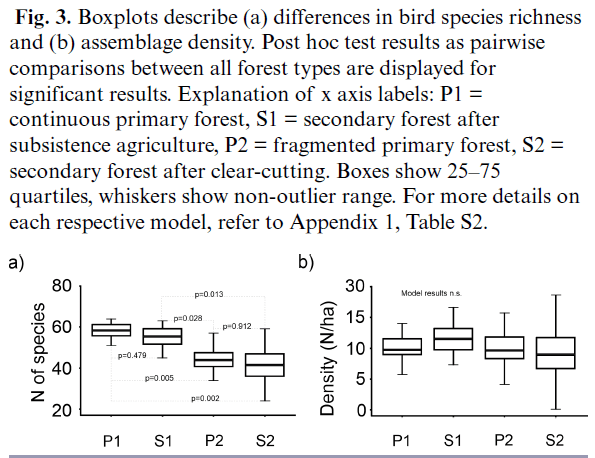
The results revealed that species richness declined significantly in disturbed habitats, particularly where forests were fragmented. Interestingly, nectarivores showed a positive response to habitat modification, while insectivores and frugivores suffered, especially in isolated forest fragments. Korejs emphasized that maintaining connectivity between forest patches is vital for preserving biodiversity, as fragmentation proved more detrimental than forest structural changes alone.

To find the full story, follow the link HERE

 multitrophicinteractions.blog